Introduction to Julie Andrews:
Julie Andrews was born on October 1, 1935, in Walton-on-Thames, England, into a family already deeply connected to the world of entertainment. Her mother was a pianist and actress, and her stepfather was a singer—so it’s no surprise that Julie’s artistic inclinations showed up early. What is surprising, though, is just how extraordinary her talent proved to be even as a child.
Growing up during World War II, Andrews experienced a childhood shaped by uncertainty and resilience. Despite the chaos around her, music became a refuge. She began performing at a young age, showcasing a vocal range that was far beyond what most would expect from a child. In fact, her voice was so remarkable that she could hit notes that many trained adult singers struggled to reach.
Her early performances weren’t confined to small family gatherings or school plays. She quickly moved onto larger stages, performing in vaudeville-style shows across Britain. These early gigs helped her develop discipline, stage presence, and confidence—skills that would later define her legendary career.
By her teenage years, Julie Andrews had already built a reputation as a prodigious talent. Her breakthrough came when she performed at the London Hippodrome, where critics and audiences alike recognized that she was not just another young performer—she was a once-in-a-generation voice.
Breakthrough on Broadway
Julie Andrews journey from British stages to international stardom truly accelerated when she moved to the United States. Broadway became the platform that introduced her to a global audience, and she made her debut in The Boy Friend in the 1950s. Her charm and vocal clarity quickly made her a standout performer.
However, it was her role in My Fair Lady that cemented her status as a theatrical powerhouse. Playing Eliza Doolittle, Andrews captivated audiences with her transformation from a Cockney flower girl to a refined lady. Her performance was not only vocally impressive but emotionally layered, showing her depth as an actress.
Another major success followed with Camelot, where she starred alongside Richard Burton. The production was both a commercial and critical success, further solidifying her reputation. By this point, Andrews had become one of the most sought-after performers on Broadway.
Interestingly, despite her success on stage, she was initially overlooked for the film version of My Fair Lady. The role went to Audrey Hepburn instead—a decision that surprised many. However, this setback turned out to be a blessing in disguise, as it opened the door for even greater opportunities in Hollywood.
Hollywood Stardom and Iconic Roles
Julie Andrews made her film debut in Mary Poppins, and it was nothing short of spectacular. Her portrayal of the magical nanny earned her an Academy Award for Best Actress, instantly establishing her as a film star. The role showcased her unique ability to blend acting, singing, and a kind of effortless charm that audiences found irresistible.
Just one year later, she starred in The Sound of Music, which became one of the most beloved films of all time. Playing Maria, a free-spirited governess who brings music and joy to a strict household, Andrews delivered a performance that resonated across generations. The film’s soundtrack remains iconic, and her voice became synonymous with timeless musical storytelling.
These two films didn’t just make her famous—they made her legendary. They demonstrated her versatility and solidified her place in cinematic history. Few actors manage to deliver back-to-back performances of such cultural impact, but Andrews did it with remarkable ease.
Beyond musicals, she also explored more dramatic and comedic roles in films like Victor/Victoria and The Americanization of Emily. These performances proved that she was not confined to a single genre, further enhancing her reputation as a well-rounded actress.
Challenges and Resilience
Despite her immense success, Julie Andrews faced significant challenges throughout her career. One of the most notable was the vocal surgery she underwent in the late 1990s. What was intended to correct a minor issue ended up damaging her vocal cords, leaving her unable to sing as she once did.
For someone whose identity was so closely tied to her voice, this was a devastating setback. Many assumed it would mark the end of her career. However, Andrews demonstrated incredible resilience. Rather than stepping away from the spotlight entirely, she adapted and found new ways to express her creativity.
She shifted her focus toward acting roles that didn’t rely heavily on singing, as well as voice work in animated films. Her narration and voice performances introduced her to a new generation of fans who may not have been familiar with her earlier work.
In addition to her professional challenges, Andrews has also been open about personal struggles, including navigating complex family dynamics. Her honesty and grace in discussing these experiences have made her an even more respected figure, both within and outside the entertainment industry.
Later Career and Continued Influence
Even decades into her career, Julie Andrews remained active and relevant. She took on roles in popular films like The Princess Diaries, where she played a regal yet warm-hearted queen. This role introduced her to younger audiences, proving that her appeal transcends generations.
Her work in animation, including voice roles in films like Shrek, further showcased her adaptability. While she may not have been singing as before, her voice still carried authority, warmth, and a distinctive elegance that made her instantly recognizable.
Beyond acting, Andrews also became a successful author. She co-wrote several children’s books, demonstrating yet another facet of her creativity. Her storytelling ability extended beyond the screen and stage, allowing her to connect with audiences in new ways.
Her influence can be seen in countless performers who cite her as an inspiration. From her vocal technique to her professionalism, Andrews set a standard that many aspire to but few achieve.
Awards, Honors, and Legacy
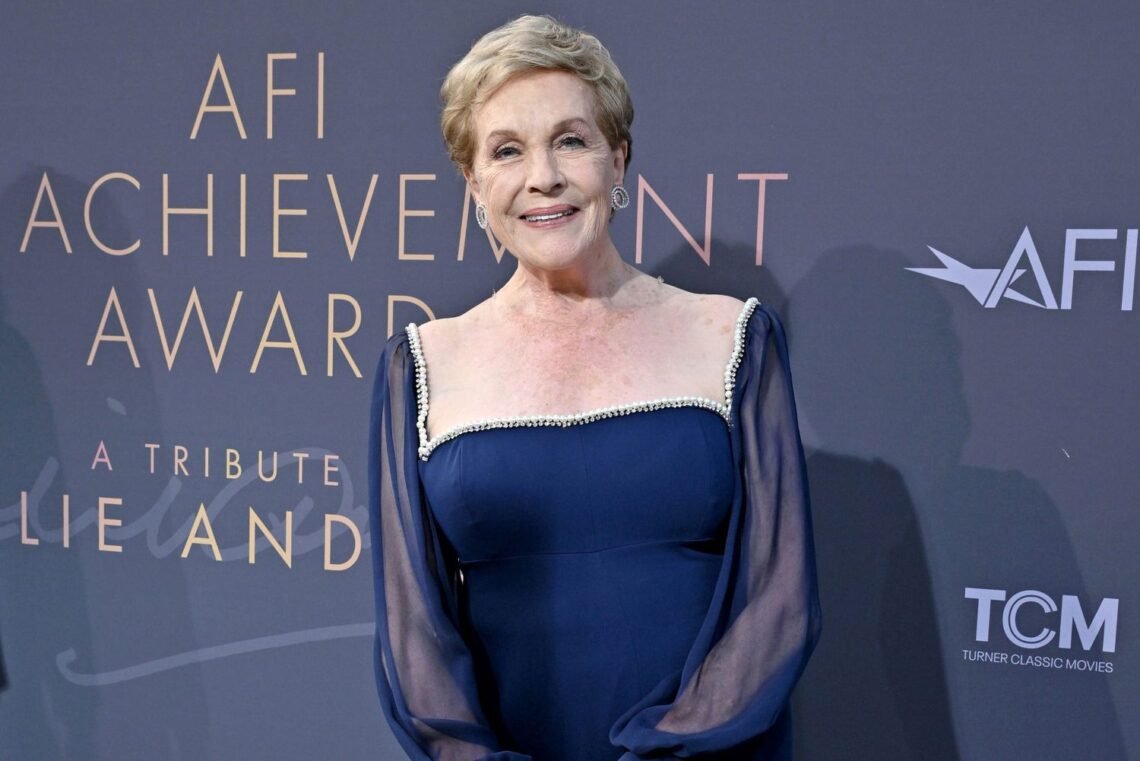
Over the course of her career, Julie Andrews has received numerous awards and honors. In addition to her Academy Award, she has earned Golden Globes, BAFTAs, and a Grammy Lifetime Achievement Award. She was also made a Dame by British Empire, becoming Dame Julie Andrews—a recognition of her contributions to the arts.
Her legacy is not just measured in awards, though. It’s reflected in the enduring popularity of her work. Films like The Sound of Music continue to be watched and loved by new generations, while her Broadway performances remain a benchmark for excellence.
What truly sets Andrews apart is her ability to connect with audiences on an emotional level. Whether through a heartfelt song or a nuanced performance, she has a way of making her characters feel real and relatable.
In an industry that often prioritizes trends over talent, Julie Andrews stands as a reminder of what true artistry looks like. Her career is a testament to dedication, Julie Andrews, and an unwavering commitment to excellence.
Conclusion:
In today’s fast-paced entertainment world, where new stars emerge almost daily, Julie Andrews remains a constant symbol of quality and authenticity. Her work continues to inspire not only performers but also anyone who values creativity and perseverance.
One of the reasons she still matters is her timeless appeal. Unlike many artists whose work feels tied to a specific era, Andrews’ performances have a universal quality. They resonate just as strongly today as they did decades ago.
Another reason is her resilience. Her ability to adapt to challenges—whether personal or professional—serves as a powerful example. She didn’t let setbacks define her; instead, she used them as opportunities to grow and evolve.
Ultimately, Julie Andrews is more than just an actress or singer. She is a cultural icon whose impact extends far beyond the stage and screen. Her story is one of talent, hard work, and grace under pressure—a combination that ensures her legacy will endure for generations to come.