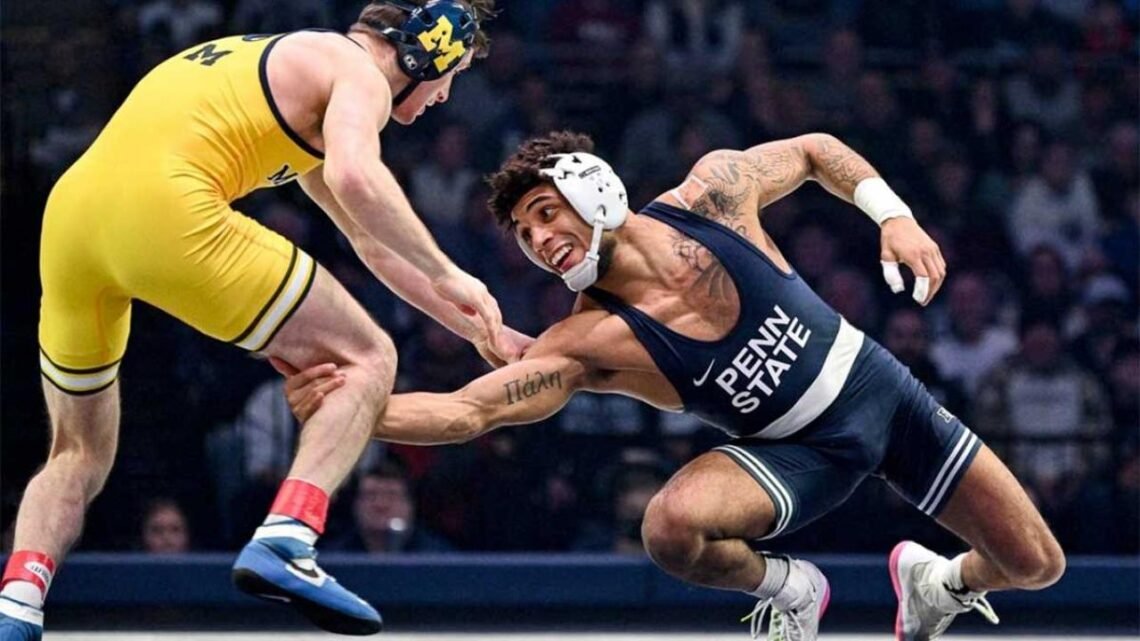
Introduction to NCAA Wrestling:
NCAA wrestling is one of the most intense and technically demanding collegiate sports in the United States. Organized under the National Collegiate Athletic Association (NCAA), it brings together some of the best amateur wrestlers from universities across the country. The sport is known for its physical toughness, strategic depth, and deep traditions that stretch back more than a century.
College wrestling serves as a bridge between high school wrestling and international or Olympic competition. Many athletes who compete in NCAA wrestling later go on to represent the United States in world championships and the Olympic Games. Because of this connection, NCAA wrestling is often viewed as one of the most important development systems for elite wrestlers in the country.
The sport combines strength, conditioning, agility, and tactical intelligence. Matches are typically fast-paced and physically demanding, requiring athletes to maintain peak conditioning throughout the season. Wrestlers compete in specific weight classes, which ensures fairness and allows athletes of different body types to excel in their respective divisions.
Another factor that makes NCAA wrestling unique is its passionate fan base. Certain universities have built decades-long wrestling traditions, with packed arenas and loyal supporters. Schools like Penn State, Iowa, and Oklahoma State have created legendary programs that continue to shape the landscape of collegiate wrestling.
Overall, NCAA wrestling is not just a sport but a culture built on discipline, resilience, and relentless pursuit of excellence. For athletes, it offers an opportunity to compete at a high level while pursuing an education, making it one of the most respected college sports in the United States.
The History and Evolution of NCAA Wrestling
The history of NCAA wrestling dates back to the early 20th century. The first official NCAA Wrestling Championships were held in 1928, marking the beginning of organized collegiate competition at a national level. Oklahoma A&M, now known as Oklahoma State University, dominated the early years and established one of the most successful wrestling dynasties in NCAA history.
During the early decades, wrestling rules and formats were still evolving. Weight classes changed several times, and scoring systems were refined to create fairer and more exciting matches. Over time, the NCAA developed standardized regulations that ensured consistency across all participating schools.
The 1950s through the 1980s saw the expansion of wrestling programs across the country. Universities began investing more resources into their wrestling teams, and the level of competition steadily increased. Legendary coaches such as Dan Gable helped transform programs into national powerhouses, raising the sport’s popularity among college fans.
In the modern era, NCAA wrestling has become more competitive than ever. The rise of powerhouse programs like Penn State has led to a new era of dominance in the sport. At the same time, advances in sports science, training methods, and nutrition have dramatically improved athlete performance.
Today, NCAA wrestling continues to evolve while maintaining its deep traditions. The championship tournament is considered one of the most prestigious amateur wrestling events in the world, drawing attention from fans, scouts, and international wrestling communities.
NCAA Wrestling Divisions and Weight Classes
The NCAA organizes wrestling into three divisions: Division I, Division II, and Division III. Each division represents a different level of competition and institutional commitment to athletics. Division I programs typically have the most resources and attract the top recruits from across the country.
Division II wrestling programs also feature highly skilled athletes but often operate with smaller budgets and fewer scholarships. Despite this, many Division II teams consistently produce exceptional wrestlers who compete at a very high level.
Division III wrestling focuses more heavily on the balance between academics and athletics. While Division III schools do not offer athletic scholarships, they still maintain competitive programs and produce talented wrestlers who are passionate about the sport.
One of the defining characteristics of NCAA wrestling is its weight-class system. Wrestlers compete in specific categories to ensure fairness and safety. Currently, the standard NCAA weight classes include 125, 133, 141, 149, 157, 165, 174, 184, 197, and heavyweight (285 pounds).
These weight classes allow athletes with different body structures to compete effectively. Wrestlers often spend significant time managing their weight throughout the season, balancing nutrition, training, and recovery to stay within their designated category.
The division structure and weight-class system together create a balanced and organized competition framework that ensures fairness while maintaining a high level of athletic performance across all NCAA wrestling programs.
Rules and Scoring in NCAA Wrestling
Understanding the rules and scoring system is essential for appreciating NCAA wrestling. Matches typically consist of three periods totaling seven minutes of wrestling time. The first period lasts three minutes, followed by two two-minute periods.
Scoring in NCAA wrestling is based on a variety of actions performed during the match. A takedown, one of the most important moves, earns two points and occurs when a wrestler takes their opponent to the mat while maintaining control. Escapes and reversals also score points and can shift the momentum of a match.
Near-fall points are awarded when a wrestler holds their opponent’s shoulders close to the mat for a certain amount of time. These situations demonstrate dominance and can result in two, three, or four points depending on the duration and control.
The most decisive way to win a match is by pin, also known as a fall. This occurs when a wrestler holds both of the opponent’s shoulders on the mat simultaneously. A pin immediately ends the match and gives maximum points to the winning team in dual competitions.
Other victory types include technical fall and major decision. A technical fall occurs when one wrestler leads by 15 points, automatically ending the match. A major decision is awarded when a wrestler wins by eight to fourteen points.
The scoring system rewards aggressive and technically skilled wrestling. Because of this, NCAA matches often feature high intensity and constant action, making them exciting for both experienced fans and newcomers to the sport.
The NCAA Wrestling Championship Tournament
The NCAA Wrestling Championships represent the pinnacle of collegiate wrestling competition. Held annually, the tournament brings together the best wrestlers from across the country to compete for individual and team titles.
Qualification for the tournament is highly competitive. Wrestlers must perform well in conference championships or earn at-large bids based on their performance throughout the season. Only the top athletes in each weight class earn the opportunity to compete on the national stage.
The championship tournament follows a double-elimination bracket format. This means wrestlers still have a chance to compete for placement even after losing one match. The structure ensures that the best athletes ultimately rise to the top while allowing wrestlers multiple opportunities to demonstrate their skills.
Team scoring is another important aspect of the tournament. Schools accumulate points based on their wrestlers’ performance, including advancement through the bracket and bonus victories such as pins or technical falls. The team with the highest total score at the end of the tournament wins the national championship.
The atmosphere at the NCAA Wrestling Championships is electric. Thousands of fans gather to watch intense matches, dramatic upsets, and unforgettable performances. For many wrestlers, winning an NCAA title is the ultimate achievement in their collegiate career.
Training and Preparation for NCAA Wrestlers
Becoming an NCAA wrestler requires an extraordinary level of dedication. Training programs are demanding and designed to develop strength, endurance, flexibility, and technical mastery. Athletes typically train year-round, with rigorous practices during the competitive season.
Strength and conditioning are key components of wrestling preparation. Wrestlers engage in weightlifting, cardiovascular training, and explosive movement drills to improve power and stamina. Because matches are physically intense, conditioning can often determine the outcome of close contests.
Technical training is equally important. Wrestlers spend hours drilling takedowns, escapes, and defensive techniques. Coaches emphasize repetition and precision to ensure athletes can execute moves instinctively during high-pressure matches.
Nutrition and weight management also play a critical role. Since wrestlers compete within strict weight classes, they must carefully monitor their diet to maintain peak performance without exceeding their weight limits. Modern programs often include nutritionists who help athletes develop healthy weight-management strategies.
Mental preparation is another crucial aspect of training. Wrestling is both physically and psychologically demanding, and athletes must maintain focus, confidence, and resilience. Many teams incorporate sports psychology techniques to help wrestlers stay mentally strong during intense competitions.
Conclusion:
NCAA wrestling continues to grow and adapt in response to changes in collegiate athletics. Advances in broadcasting and digital media have expanded the sport’s visibility, allowing fans to watch matches and follow teams more easily than ever before.
Recruiting has also become increasingly competitive. Top high school wrestlers are heavily scouted by major programs, and recruiting decisions can significantly influence the success of college teams. As a result, universities invest significant resources in attracting elite talent.
Another important development is the increased focus on athlete health and safety. New regulations regarding weight management, concussion protocols, and training practices aim to protect wrestlers while maintaining the integrity of the sport.
Women’s collegiate wrestling is also rapidly growing. Although historically dominated by male athletes, women’s wrestling programs are expanding across universities, creating new opportunities and increasing the sport’s inclusivity.