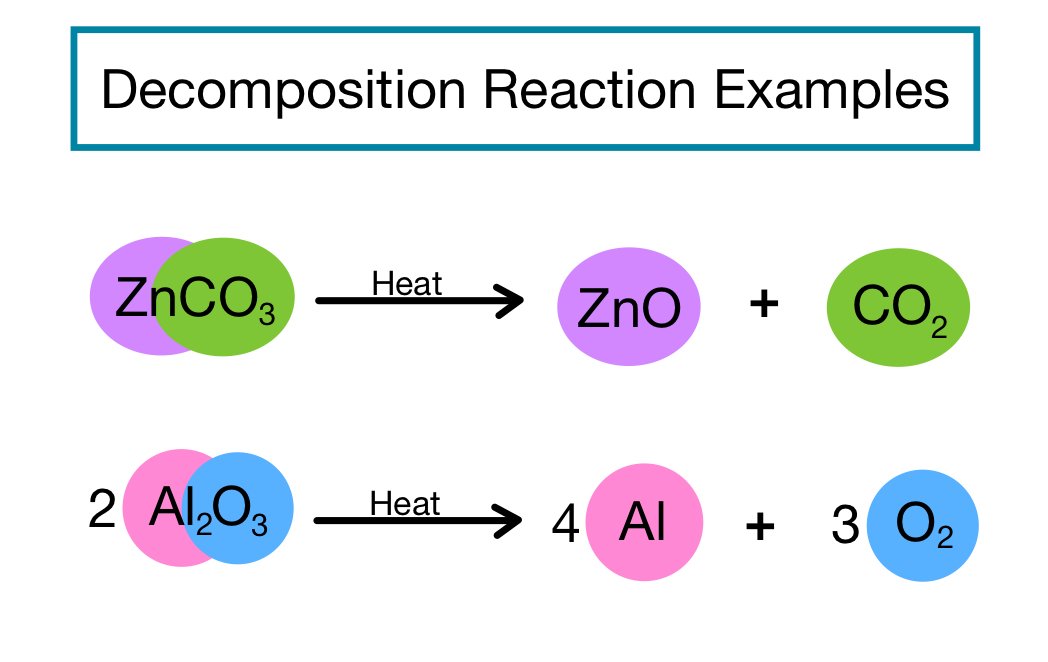
Introduction to Decomposition Reaction Example:
A Decomposition Reaction Example reaction is one of the most fundamental types of chemical reactions you will encounter in chemistry. In simple terms, it occurs when a single compound breaks down into two or more simpler substances. If you are looking for a clear decomposition reaction example, the general formula looks like this:
AB → A + B
This means one compound (AB) splits into two separate products (A and B). While the concept sounds straightforward, decomposition reactions play a powerful role in laboratory experiments, industrial processes, and even natural phenomena.
What makes decomposition reactions fascinating is that they require energy input. Unlike combination reactions where substances join together, decomposition reactions involve breaking chemical bonds. Breaking bonds always requires energy, which may come in the form of heat, electricity, or light. This energy input is what initiates the separation of components.
A classic decomposition reaction example is the breakdown of calcium carbonate when heated:
CaCO₃ → CaO + CO₂
In this reaction, calcium carbonate decomposes into calcium oxide and carbon dioxide gas. This process is widely used in industries, particularly in the manufacturing of cement and lime.
From an expert perspective, understanding decomposition reactions is essential because they help us grasp how compounds behave under different conditions. Whether in laboratories, manufacturing plants, or environmental processes, decomposition reactions are everywhere. They are not just textbook examples; they are practical chemical processes shaping modern industry and daily life.
Thermal Decomposition Reaction Example
Thermal Decomposition Reaction Example occurs when heat is the energy source responsible for breaking down a compound. This is one of the most common forms of decomposition reactions and is frequently demonstrated in chemistry classrooms.
One well-known thermal decomposition reaction example is the breakdown of potassium chlorate:
2KClO₃ → 2KCl + 3O₂
When potassium chlorate is heated, it decomposes into potassium chloride and oxygen gas. This reaction is often used in laboratory settings to produce oxygen gas safely and efficiently.
Another important thermal decomposition reaction example involves calcium carbonate, as mentioned earlier. When limestone (calcium carbonate) is heated in a kiln at high temperatures, it decomposes into calcium oxide and carbon dioxide. This reaction forms the basis of lime production, a critical component in construction materials.
Thermal decomposition reactions are significant in metallurgy as well. Metal carbonates and hydroxides often decompose when heated, forming metal oxides. For instance:
2Fe(OH)₃ → Fe₂O₃ + 3H₂O
In this reaction, iron(III) hydroxide decomposes into iron(III) oxide and water vapor upon heating. This process is relevant in ore processing and refining.
From an industrial perspective, thermal decomposition is essential in cement manufacturing, glass production, and even waste treatment systems. Heat-driven decomposition reactions allow industries to transform raw materials into useful products efficiently and economically.
Electrolytic Decomposition Reaction Example
Electrolytic decomposition involves using electricity as the energy source to break apart a compound. This type of reaction is called electrolysis and is widely used in both laboratory and industrial applications.
A classic electrolytic decomposition reaction example is the electrolysis of water:
2H₂O → 2H₂ + O₂
When an electric current passes through water (with a small amount of electrolyte added), it splits into hydrogen gas and oxygen gas. This reaction is extremely important in modern energy research, especially in hydrogen fuel production.
The electrolysis of water is particularly exciting today because hydrogen is considered a clean energy source. By using renewable electricity to drive this decomposition reaction, we can produce green hydrogen, which emits only water when burned.
Another example is the electrolysis of molten sodium chloride:
2NaCl → 2Na + Cl₂
This reaction produces sodium metal and chlorine gas. It is used in the chlor-alkali industry to manufacture chlorine for disinfectants, plastics, and other chemicals.
Electrolytic decomposition reactions demonstrate how electrical energy can be converted into chemical energy. From an expert standpoint, these reactions highlight the connection between chemistry and electrical engineering, particularly in battery technology and sustainable energy systems.
Photolytic Decomposition Reaction Example
Photolytic decomposition occurs when light energy causes a compound to break apart. This type of reaction is especially important in environmental chemistry and atmospheric science.
A well-known photolytic decomposition reaction example involves silver chloride:
2AgCl → 2Ag + Cl₂
When exposed to sunlight, silver chloride decomposes into silver metal and chlorine gas. This reaction forms the foundation of traditional photographic film development.
Another important example is the breakdown of ozone in the atmosphere:
O₃ → O₂ + O
Ultraviolet radiation from the sun can cause ozone molecules to decompose. This process plays a crucial role in the ozone layer’s dynamic balance and has significant environmental implications.
Photolytic decomposition reactions also occur in plants during photosynthesis. While photosynthesis is overall a complex reaction, part of the process involves the light-driven splitting of water molecules. This step is essential for oxygen production on Earth.
From an environmental standpoint, photolytic decomposition reactions help regulate atmospheric chemistry. Understanding these reactions allows scientists to study air pollution, climate change, and ozone depletion more effectively.
Real-Life Decomposition Reaction Example in Everyday Life
Decomposition reactions are not confined to laboratories; they happen around us every day. One practical decomposition reaction example involves hydrogen peroxide:
2H₂O₂ → 2H₂O + O₂
Hydrogen peroxide decomposes into water and oxygen gas. This reaction occurs naturally over time, which is why hydrogen peroxide is stored in dark bottles to slow down light-induced decomposition.
Another everyday example is baking powder in cooking. Baking powder often contains sodium bicarbonate, which decomposes when heated:
2NaHCO₃ → Na₂CO₃ + CO₂ + H₂O
The release of carbon dioxide gas causes cakes and bread to rise. This simple decomposition reaction plays a critical role in baking.
Airbags in cars also rely on decomposition reactions. Sodium azide decomposes rapidly when triggered:
2NaN₃ → 2Na + 3N₂
The nitrogen gas produced inflates the airbag almost instantly, providing protection during collisions.
These examples show how decomposition reactions contribute to safety, cooking, and healthcare. They are practical, useful, and deeply integrated into modern living.
Importance of Studying Decomposition Reaction Examples
Understanding a decomposition reaction example goes beyond memorizing equations. It teaches us about energy changes, bond breaking, reaction kinetics, and product formation.
In academic chemistry, decomposition reactions help students understand reaction types and balancing chemical equations. They serve as foundational knowledge before studying more complex reaction mechanisms.
In industrial chemistry, decomposition reactions are used in manufacturing fertilizers, cement, metals, and gases. Without decomposition processes, many industries would not function efficiently.
In environmental science, decomposition reactions help explain pollutant breakdown, ozone chemistry, and atmospheric processes. Researchers rely on these reactions to develop cleaner technologies and sustainable solutions.
From a professional standpoint, mastering decomposition reaction examples builds a strong understanding of chemical behavior. Whether you are a student, researcher, or industry professional, these reactions form the backbone of many chemical systems.
Conclusion:
A decomposition reaction example may seem simple at first glance, but it represents a powerful and essential concept in chemistry. From thermal decomposition in cement production to electrolytic water splitting for hydrogen fuel, these reactions shape industries and innovations.
We have explored thermal, electrolytic, and photolytic decomposition reactions, along with real-life examples such as hydrogen peroxide breakdown and airbag deployment. Each example demonstrates how a single compound can transform into simpler substances when energy is applied