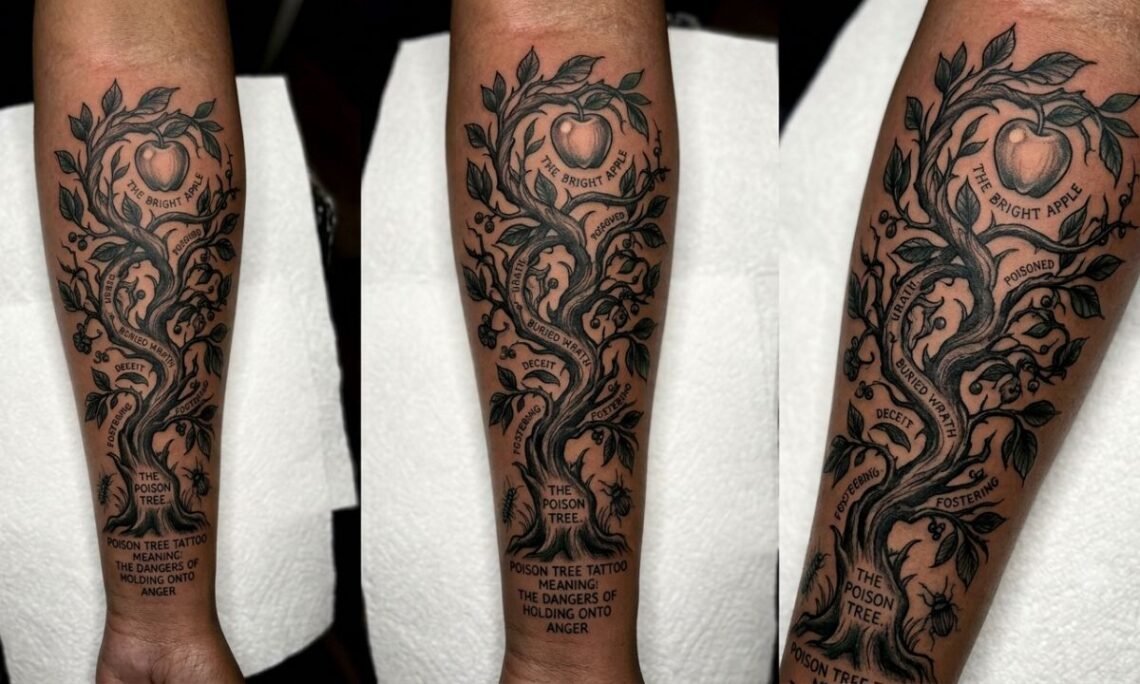
A poison tree tattoo is a striking tattoo design that can represent hidden anger, betrayal, emotional pain, temptation, or the darker side of human nature. Its meaning often depends on the artwork, the person’s experiences, and the symbols included in the design. Some people choose a poison tree tattoo because they connect with its emotional message, while others appreciate its dark, mysterious appearance.
The idea of a poison tree has strong literary connections, particularly through William Blake’s famous poem A Poison Tree. The poem explores how suppressed anger can grow when people refuse to express their feelings honestly. This connection gives the tattoo a deeper meaning beyond its visual appeal.
Poison tree tattoos can feature twisted branches, sharp roots, dark leaves, poisonous fruit, snakes, skulls, or other symbolic elements. Some designs look realistic and dramatic, while others use minimalist lines or traditional tattoo styles.
In this article, we will explore the meaning of a poison tree tattoo, its connection to literature, popular design ideas, suitable placements, and important considerations before getting one. Whether you want a tattoo with a personal message or simply appreciate dark botanical artwork, understanding its symbolism can help you choose a design that reflects your personality.
Table of Contents
- What Is a Poison Tree Tattoo?
- The Meaning and Symbolism of a Poison Tree Tattoo
- The Connection to William Blake’s Poem
- Popular Poison Tree Tattoo Designs
- Best Placements for a Poison Tree Tattoo
- Colors and Artistic Styles
- Things to Consider Before Getting This Tattoo
- Frequently Asked Questions
- Conclusion
What Is a Poison Tree Tattoo?
A poison tree tattoo is a design inspired by the idea of a tree associated with danger, toxicity, negative emotions, or forbidden knowledge. Unlike ordinary tree tattoos, which often symbolize life, growth, and stability, a poison tree design can explore more complicated emotions and experiences.
The tree may appear dead, twisted, thorny, or unusually dark. Its branches might look like skeletal fingers, while its roots can spread across the skin like veins. Some designs include poisonous-looking fruit or flowers to emphasize the contrast between outward beauty and hidden danger.
However, there is no single definition that applies to every poison tree tattoo. For one person, it might represent a painful relationship. For another, it could symbolize personal struggles, emotional resilience, or the consequences of keeping negative feelings inside.
Why the Tree Is an Important Symbol
Trees have long appeared in art, mythology, literature, and religious traditions. They can represent life, wisdom, family connections, transformation, and the passage of time.
A poison tree changes this familiar symbol into something darker. Instead of representing healthy growth, it may suggest that harmful emotions or experiences can develop when they are ignored. The tree becomes a visual metaphor for something that begins internally and gradually influences a person’s life.
This contrast makes the design appealing to people who want meaningful artwork rather than a purely decorative tattoo.
Is a Poison Tree Tattoo Always Negative?
Not necessarily. Although the imagery often has dark associations, the tattoo can communicate awareness, healing, and personal growth.
Someone who has experienced betrayal might use the design to remember an important life lesson. Another person might see it as a reminder to recognize unhealthy patterns before they become destructive.
The meaning ultimately belongs to the person wearing it. A poison tree tattoo does not automatically suggest anger, revenge, or a negative personality. Its message depends on the individual’s interpretation and the details chosen for the artwork.
The Meaning and Symbolism of a Poison Tree Tattoo
The symbolism of a poison tree tattoo is one of the main reasons people find this design interesting. Its appearance can communicate several ideas at once, especially when the tree includes recognizable elements such as thorns, fruit, roots, or dead branches.
Understanding these symbols can help you develop a design that represents a particular experience or personal belief.
Hidden Anger and Suppressed Emotions
One of the most recognizable interpretations is hidden anger. A tree grows gradually, making it a useful symbol for emotions that develop over time.
When people avoid discussing their feelings, resentment can sometimes become stronger. A poison tree tattoo can represent this process and serve as a reminder that unresolved emotions deserve attention.
For someone who connects with this interpretation, the tattoo might symbolize a difficult period in life. It can also represent a commitment to communicate more openly instead of allowing frustration to build.
Betrayal and Toxic Relationships
A poison tree can also represent relationships that appear attractive but eventually cause emotional harm. A beautiful tree with poisonous fruit creates a visual contrast between appearance and reality.
This interpretation may resonate with people who have experienced manipulation, dishonesty, or unhealthy personal connections. The design can symbolize the lessons learned from those experiences without identifying another person.
Some people choose a poison tree tattoo to mark the end of a difficult chapter. Others use it to remind themselves to recognize warning signs and establish healthier boundaries.
Temptation and Hidden Danger
Poisonous fruit can look appealing even though it may be dangerous. This contrast gives the poison tree tattoo another possible meaning: temptation.
The design can represent choices that offer immediate satisfaction but lead to unwanted consequences. It may also symbolize situations where appearances cannot be trusted.
For people who appreciate symbolic artwork, this interpretation adds complexity to the tattoo. The tree becomes a reminder to look beyond surface appearances and consider the possible consequences of important decisions.
Personal Growth Through Difficult Experiences
A dark symbol does not always have to represent defeat. Some people interpret the poison tree as a record of the challenges they have survived.
In this context, the tattoo acknowledges that painful experiences can influence a person’s development. The tree represents the past, while new leaves or a healthy branch might symbolize recovery and a fresh beginning.
This interpretation can make the design more personal. Rather than focusing entirely on suffering, it recognizes the importance of learning, self-awareness, and change.
The Connection to William Blake’s Poem
William Blake’s poem A Poison Tree is an important literary reference for understanding the symbolism behind this tattoo. Published in his 1794 collection Songs of Experience, the poem explores anger, emotional expression, and the consequences of nurturing resentment.
Its central idea is that anger handled openly may fade, while anger that is concealed can grow into something more harmful. Blake uses the image of a tree to illustrate this emotional process.
This literary connection gives the tattoo a meaning that goes beyond dark imagery. People familiar with the poem may recognize the design as a reference to emotional suppression and the destructive potential of unresolved conflict.
How the Poem Influences Tattoo Designs
Some poison tree tattoos borrow visual ideas from the poem rather than reproducing a particular illustration.
For example, an artist might create a tree with an attractive fruit, representing something that appears desirable but hides danger. Another design might show a twisted trunk and tangled roots to symbolize resentment that has developed over time.
A more literary approach could include the words “A Poison Tree” or a short, personally meaningful phrase. Others may prefer an image without text because the symbolism can stand on its own.
If you want your tattoo to refer specifically to Blake’s poem, discuss the literary connection with your tattoo artist. This can help distinguish your design from a general dark tree or poisonous plant tattoo.
Understanding the Poem’s Message
The poem is not simply about being angry. It also explores the difference between expressing an emotion and allowing it to grow through secrecy, resentment, and hostile intentions.
That distinction is important when interpreting the tattoo. A poison tree does not have to celebrate anger or revenge. It can instead represent an understanding of how destructive unresolved emotions can become.
For some people, this makes the tattoo a personal reminder to address problems before they grow into larger conflicts.
Popular Poison Tree Tattoo Designs
Poison tree tattoos can be adapted to many artistic preferences. The best design depends on whether you prefer detailed illustrations, understated symbolism, or a dramatic composition.
Before choosing a style, consider which elements best express your intended meaning. A small tree with a single fruit may communicate a different message from a large tree with tangled roots and skull-shaped branches.
1. Dark and Gothic Poison Tree Tattoo
A gothic poison tree tattoo often features twisted branches, deep shadows, sharp roots, and a dramatic silhouette.
The design may resemble a tree from a mysterious forest or a scene from a dark fantasy illustration. Black ink and strong contrast can make the branches appear especially striking.
This style suits people who enjoy gothic artwork, dark symbolism, or dramatic visual compositions. It can work as a standalone tattoo or as part of a larger sleeve.
2. Poison Tree With Toxic Fruit
A tree carrying unusual or poisonous-looking fruit emphasizes the contrast between beauty and danger.
The fruit might be represented through dark shading, unusual shapes, or a small amount of color. Some designs make the fruit the main focal point, while others use it as a subtle detail.
This approach is particularly suitable for people who associate the poison tree with temptation, betrayal, or appearances that hide harmful consequences.
3. Minimalist Poison Tree Tattoo
A minimalist design uses simple lines and limited detail to communicate the concept.
It might feature a small tree with bare branches, a narrow trunk, or a single fruit hanging from one branch. Without extensive shading, the design can look understated and elegant.
Minimalist tattoos may appeal to people who prefer subtle artwork. However, the final size should still allow enough space for the lines to remain clear as the tattoo ages.
4. Poison Tree With Roots and Thorns
Roots and thorns can add several layers of symbolism to a poison tree tattoo.
Deep roots may represent experiences that continue to influence the present, while thorns can suggest pain, protection, or emotional barriers. When these elements appear together, they create a visually complex design.
This style can be particularly effective on the forearm, calf, or upper arm, where the artist has room to show the tree’s structure.
5. Poison Tree With a Skull
A skull adds an association with mortality, danger, or the consequences of destructive behavior.
The skull might appear among the roots, inside the trunk, or as part of the tree’s fruit. Some designs make this detail immediately visible, while others hide it within the branches.
Although the combination can look dramatic, it is worth considering whether the skull adds meaning to your tattoo or simply makes the artwork more complicated.
6. Poison Tree With a Snake
A snake wrapped around the trunk or moving between the branches can introduce ideas of temptation, transformation, or hidden danger.
Snakes have different meanings across cultures and artistic traditions, so the symbolism is not universal. Some people associate them with wisdom or renewal, while others connect them with deception or threat.
If you choose this combination, think about how the snake and tree work together. Their positions, shapes, and expressions can influence the overall message.
Best Placements for a Poison Tree Tattoo
The placement of a poison tree tattoo affects its appearance, level of detail, visibility, and practical maintenance. Because trees naturally have an upright structure, certain body areas can accommodate their shape particularly well.
Before deciding on a location, consider the size of the design and whether you want it to remain visible in everyday life.
Forearm
The forearm is a popular option for vertical designs because it offers a relatively long surface for the trunk and branches.
A small design can sit on the inner forearm, while a more detailed tree may extend toward the elbow or wrist. This placement also allows you to see the tattoo easily.
However, forearm tattoos are often visible, so consider workplace expectations and your personal preferences before committing.
Upper Arm and Shoulder
The upper arm offers room for medium-sized and detailed artwork. The rounded shape of the shoulder can also help an artist create a design that follows the body’s natural contours.
A poison tree tattoo in this area can include spreading branches, detailed roots, and additional symbols without requiring an extremely narrow composition.
This placement may be suitable if you want a design that can be covered by many shirts but remains visible when you choose to show it.
Back and Chest
The back provides a large canvas for an elaborate poison tree tattoo. An artist can create a wide tree with extensive branches, detailed roots, and surrounding elements.
The chest can also accommodate a striking design, although the available space and the body’s natural contours will influence the composition.
Larger placements generally allow more detail, but they also require more planning and may involve longer tattoo sessions. Discuss the design’s proportions and expected session time with your artist.
Calf and Thigh
The calf works well for a tall, narrow tree design. The trunk can follow the leg’s vertical shape, while the branches spread across the available space.
The thigh offers more room for a larger illustration, making it suitable for designs that combine a poison tree with snakes, skulls, or other decorative elements.
Pain levels vary by individual and exact placement. Ask your tattoo artist what to expect and follow their advice about preparing for the appointment.
Colors and Artistic Styles
Color and artistic style can change the mood of a poison tree tattoo significantly. Some people prefer a completely black design, while others use selected colors to highlight poisonous fruit, unusual leaves, or specific symbolic details.
Your choice should reflect the intended message as well as your personal aesthetic preferences.
Black and Grey Tattoos
Black and grey is a natural choice for dark botanical artwork. Shading can create depth, emphasize the tree’s texture, and distinguish the branches from the background.
This style works particularly well for gothic, realistic, and illustrative designs. It can also suit minimalist tattoos when the artist uses simple outlines and limited shading.
A well-planned black and grey tattoo does not need excessive detail to communicate its message. Strong composition and readable shapes can be just as effective.
Red and Black Tattoos
Red and black can create a dramatic contrast. Red fruit, small flowers, or selected branches can stand out against darker tree structures.
Some people associate red with anger, danger, passion, or emotional intensity. These associations are personal and cultural rather than fixed rules, so the color does not have to carry the same meaning for everyone.
Using red sparingly can help emphasize a particular feature without overwhelming the overall design.
Realistic and Illustrative Styles
A realistic poison tree tattoo may include detailed bark, carefully shaded roots, and fruit that appears almost lifelike.
An illustrative approach gives the artist more freedom to exaggerate the tree’s shape. Branches might resemble bones, roots could form unusual patterns, and the fruit might have a surreal appearance.
Both styles can work well. The right choice depends on whether you prefer a recognizable natural tree or a more imaginative interpretation.
Fine-Line and Abstract Styles
Fine-line designs use delicate outlines and restrained detail. They can create an elegant poison tree tattoo with a quieter visual impact.
Abstract designs may focus on the emotional idea rather than botanical accuracy. For example, the tree might have irregular branches, fragmented roots, or shapes that suggest emotional conflict.
When choosing fine-line work, discuss the appropriate size with your artist. Extremely small details can become less distinct over time, so a design should leave enough space for its lines to remain readable.
Things to Consider Before Getting This Tattoo
A poison tree tattoo can be meaningful, but choosing the right design requires more than selecting an attractive reference image. It is worth considering the message, size, placement, and practical requirements before making a final decision.
Decide What the Tattoo Means to You
Start by identifying the idea you want the tattoo to represent.
You might connect it with William Blake’s poem, a personal lesson, a difficult experience, or the contrast between outward beauty and hidden danger. You may also prefer the design simply because you appreciate its dark botanical appearance.
Having a clear intention can help you decide which elements belong in the final artwork. It also gives your tattoo artist a useful starting point for developing an original composition.
Choose an Experienced Tattoo Artist
Look for an artist whose portfolio demonstrates skill in the style you want. Detailed trees may require strong line work, convincing shading, and an understanding of how shapes fit together.
Review healed tattoo photographs when available, not just freshly completed work. Healed examples can provide a better sense of how the artist’s designs look after recovery.
Discuss your preferred size, placement, and budget before booking. A professional artist should be willing to explain what is realistic for your chosen design.
Consider Size and Long-Term Appearance
A design that looks clear on a screen may not work equally well at a very small size.
Tiny branches, fine roots, and closely spaced details can become harder to distinguish as a tattoo ages. Giving the design enough room can help preserve its overall structure.
Ask your artist whether any elements should be simplified or enlarged. A thoughtful design often produces a better long-term result than trying to include every possible symbol.
Follow Proper Aftercare
Tattoo aftercare is important for healing and preserving the appearance of the artwork. Follow your tattoo artist’s instructions for cleaning, moisturizing, and protecting the area.
Avoid picking at healing skin, and do not expose the fresh tattoo to swimming pools or other soaking environments until it has healed according to professional guidance. Protect healed tattoos from excessive sun exposure because ultraviolet light can contribute to fading.
If you notice worsening redness, increasing pain, unusual discharge, or other signs of possible infection, seek medical advice. Proper aftercare supports healing, although it cannot eliminate every potential complication.
Frequently Asked Questions
1. What Does a Poison Tree Tattoo Mean?
A poison tree tattoo can symbolize suppressed anger, betrayal, toxic relationships, temptation, or hidden danger. Some people interpret it as a reminder to address difficult emotions before they become destructive. Its meaning depends on the person’s experiences and the details of the design.
2. Is a Poison Tree Tattoo Connected to William Blake?
Yes, the design can be connected to William Blake’s poem A Poison Tree, published in 1794. The poem explores how anger that remains hidden can grow into resentment and lead to harmful consequences. However, not every poison tree tattoo is inspired by the poem.
3. Is a Poison Tree Tattoo a Negative Symbol?
Not always. Although its imagery often has dark associations, it can represent awareness, resilience, personal growth, or lessons learned from difficult experiences. The intended message depends on the person wearing it and the elements included in the artwork.
4. Where Is the Best Place to Get a Poison Tree Tattoo?
The forearm, upper arm, shoulder, calf, thigh, back, and chest can all work well. Smaller designs may suit the forearm or calf, while larger compositions can benefit from the space available on the back or thigh. The best placement depends on the design’s size, detail, and desired visibility.
5. What Style Looks Best for a Poison Tree Tattoo?
Black and grey, gothic, realistic, fine-line, and illustrative styles can all work well. Black and grey emphasizes shadows and texture, while red accents can highlight poisonous-looking fruit. Choose a style that matches your intended meaning and consult an artist experienced in that approach.
Conclusion
A poison tree tattoo combines dark botanical imagery with symbolism that can explore anger, betrayal, temptation, emotional pain, and personal growth. Its connection to William Blake’s poem gives it an additional literary meaning, particularly for people interested in the consequences of suppressed emotions.
From minimalist outlines to elaborate gothic trees, there are many ways to interpret this design. The choice of branches, roots, fruit, colors, and placement can help communicate a personal message without relying on words.
Before getting the tattoo, decide what you want it to represent, choose a suitable artistic style, and work with an experienced tattoo artist. The most meaningful poison tree tattoo is one that reflects your own interpretation and remains visually clear over time.